English
  German
  French
  Dutch
Dutch  Japanese
  Russian
Introduction
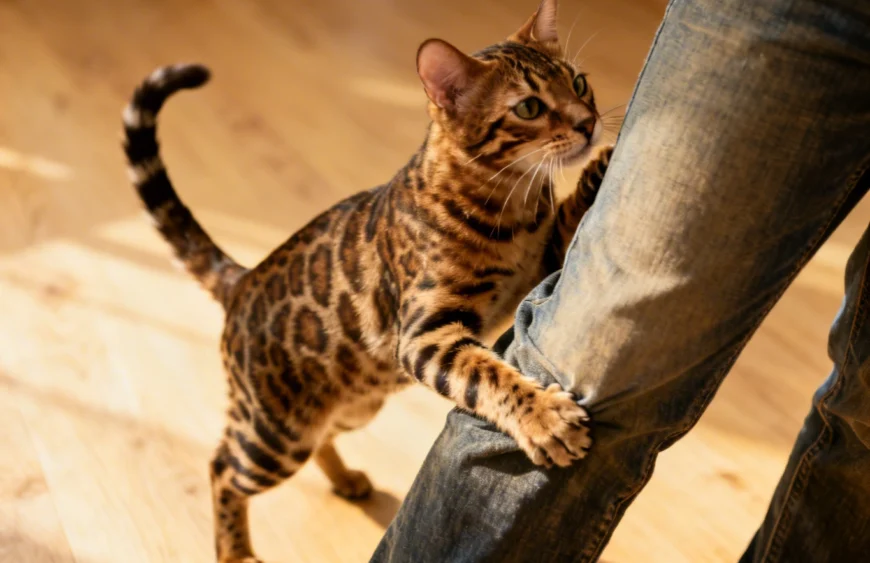
If you own a Bengal, you already know they are not typical house cats. Intelligent, energetic, and intensely social, Bengals display stronger instinct-driven behaviors than many breeds.
One of the biggest challenges owners face is what they often describe as a male Bengal cat in heat — even though technically male cats do not experience heat cycles like females. Instead, they react hormonally to sexual maturity, nearby females, or territorial competition.
These behaviors can include:
Urine spraying
Nighttime vocalization
Aggression toward other pets
Escaping attempts
Hyperactivity and stress
Understanding why this happens is the key to solving it.
Do Male Bengal Cats Actually Go Into Heat?
Male cats don’t cycle hormonally like females. However, intact males experience constant reproductive drive once sexually mature, usually around 6–12 months of age.
At this stage, testosterone influences territorial marking, mating attempts, and aggression. Unneutered males are far more likely to spray urine to attract mates and signal dominance.
Bengals may show these behaviors more intensely because they retain strong territorial instincts and high activity levels compared to many domestic breeds.
So when owners say their male Bengal is “in heat,” they are usually seeing mating-driven stress and energy overflow rather than a true biological cycle.
Signs of a Male Bengal Cat in Heat-Like Behavior
If your Bengal suddenly acts differently, watch for these indicators:
Physical and behavioral signs
Persistent urine spraying on vertical surfaces
Restlessness or pacing
Loud nighttime yowling
Increased aggression toward other cats
Obsessive attempts to escape outdoors
Spraying is one of the most common signals. Cats use urine to mark territory and communicate reproductive status.
In fact, intact male cats show spraying behavior far more frequently than neutered ones, sometimes in up to 85–90% of cases.
Why Bengal Cats Show Stronger Mating Behavior
Bengals were bred from Asian leopard cat ancestry, meaning they often retain:
High prey drive
High stamina
Strong territorial instincts
Need for stimulation
When these instincts aren’t channeled, the energy can turn into stress behaviors such as spraying, aggression, or destruction.
This isn’t disobedience — it’s biology plus boredom.
Case Study: A Real Bengal Owner Scenario
A Bengal owner described how their intact male began spraying nightly and trying to escape once he reached maturity. Environmental enrichment alone helped somewhat, but the behavior didn’t fully stop until hormonal triggers were addressed.
This pattern is common:
territorial stress, mating drive, and environmental stimulation all interact.
The takeaway: there is never one single solution.
Best Solutions for Male Bengal Cat Heat Behavior
1. Targeted Behavioral Tools
For intact males that cannot yet be neutered, behavioral outlets can help redirect instinct.
Examples include:
Scent-based calming tools
Structured play before bedtime
Safe outlets for mounting behavior
Some owners also use specialized enrichment tools designed to simulate prey or social interaction, which can help reduce anxiety and provide a physical release channel.
These tools are not replacements for neutering, but they can help stabilize behavior during hormonal peaks.
2. Environmental Enrichment
Many “heat-like” behaviors come from excess energy.
Your Bengal needs:
Climbing structures
Puzzle feeders
Hunting games
Daily interactive play
Behaviorists often recommend Multimodal Environmental Modification, meaning more space, resources, and stimulation to reduce stress.
Think of it as giving your Bengal a job to do.
3. Pheromone Therapy
Synthetic pheromone diffusers mimic calming scent signals cats produce naturally.
These products can help reduce stress and marking impulses by making cats feel secure in their environment.
They are especially useful in multi-cat homes or after moving to a new house.
4. Energy Release Solutions
One overlooked trigger of mating behavior is unspent physical energy.
Bengals need far more stimulation than average cats.
Many owners find success with:
Cat wheels
Climbing obstacle zones
Interactive toys
Scheduled play routines
When physical and mental energy is burned off, stress hormones drop — reducing mating-driven behaviors.
5. Companion-Based Stress Reduction
Some Bengals develop anxiety when alone, which amplifies hormone-driven behavior.
Providing:
A bonded cat companion
Structured social play
Predictable routines
can reduce stress signals that trigger marking and agitation.
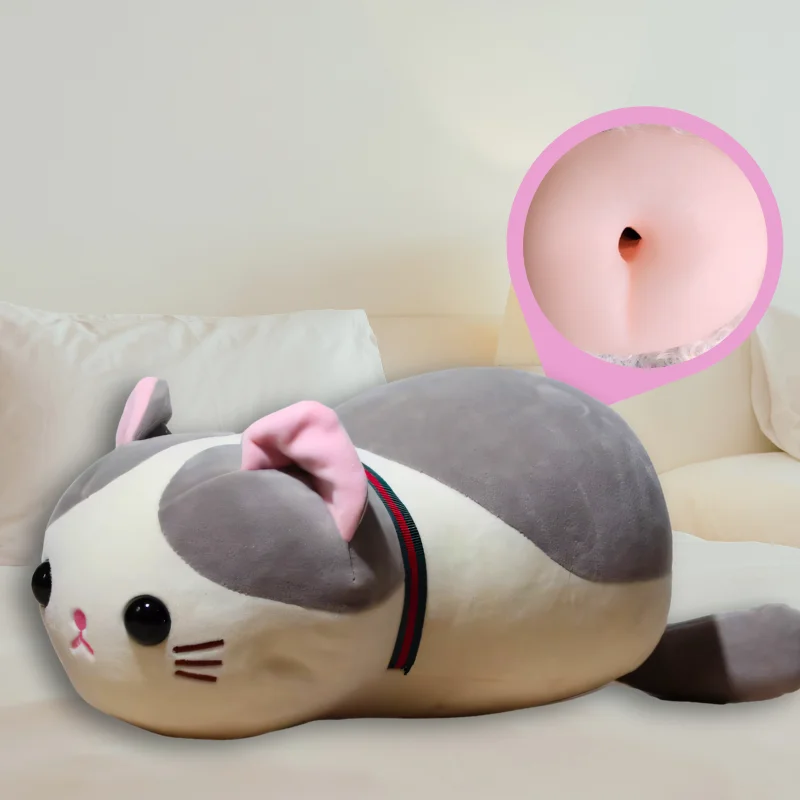
😻 Realistic Cat Mating Toy for Male Cats – Satisfy Your Cat’s Needs
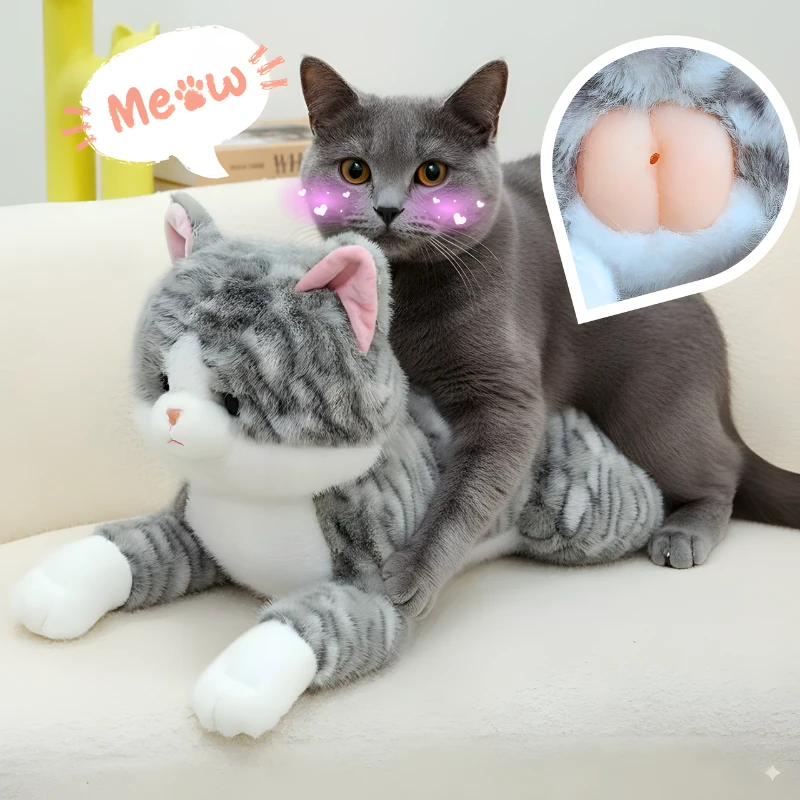
😻 Realistic Cat Sex Doll for Male Cats – Safe & Effective Alternative to Neutering
Data Snapshot: What Actually Works
| Solution | Effectiveness |
|---|---|
| Environmental enrichment | High |
| Pheromone diffusers | Moderate–High |
| Energy release activities | High |
| Punishment or scolding | Ineffective / harmful |
Punishing spraying can increase anxiety and worsen the problem.
Always focus on root causes instead.
How to Calm a Male Bengal Cat Immediately
If your Bengal is currently in a behavioral surge, try this short-term routine:
Provide 20 minutes of intense play before bedtime
Clean sprayed areas with enzymatic cleaners
Increase vertical territory space
Reduce visual access to outdoor cats
Maintain consistent feeding times
These steps lower stress hormones and help restore routine stability.
FAQ Section
Why does my Bengal spray even indoors?
Spraying is communication — often triggered by territorial stress, nearby cats, or mating signals.
Can enrichment toys help a male Bengal cat during mating-driven behavior?
Yes. Enrichment tools can play an important role in reducing stress, excess energy, and frustration in intact male cats.
Highly active breeds like Bengals often display mounting, pacing, or spraying when their physical and mental energy has no outlet. Providing appropriate stimulation can redirect these instincts into safe behaviors.
Some specialized interactive toys are designed to:
Provide physical release of pent-up energy
Reduce anxiety linked to hormonal drive
Offer comfort through simulated companionship
Help prevent destructive or territorial behaviors
While enrichment tools are not a substitute for neutering, many owners find they help stabilize behavior, especially in young or breeding males.
Do companionship-style toys really reduce stress in cats?
For some cats, yes.
Behaviorists note that cats experiencing social frustration or sexual drive may benefit from objects that provide:
Physical interaction
Routine engagement
Familiar scent association
Comfort when alone
These tools work best when combined with play routines, environmental enrichment, and predictable daily schedules.
Can enrichment tools really help?
Yes. When a Bengal’s energy is properly channeled, stress behaviors often decline.
Final Thoughts
Living with a Bengal means living with a highly intelligent predator in miniature form.
When a male Bengal cat shows heat-like behavior, it isn’t defiance — it’s instinct, hormones, and unmet needs interacting.
The best approach combines:
Hormonal management
Environmental stimulation
Stress reduction
Structured outlets for energy
When these elements align, even the most intense Bengal can become calm, affectionate, and stable.